
Creating Our Futures Together
The 2023 UNESCO Recommendation on Education
for Peace, Human Rights, and Sustainable Development
14 Essentials and 42 Guiding Questions
for Educators Around the World
Introduction
Few would disagree with the idea that people cannot live in dignity without basic literacy and numeracy. Yet how should we respond to the question: beyond these fundamentals, what should we learn?
A look back at history shows that what has been prioritized in education has varied greatly across eras and cultures—from poetry and music in ancient Greece to information technologies in the modern age. This invites us to refine the question: what kind of education and learning should we cultivate not only for ourselves living in contemporary society, but also for future generations?
Answering this question is by no means easy. However, a crucial international framework emerged in November 2023. At the 42nd session of the UNESCO General Conference, 194 Member States reached a shared understanding and adopted by consensus the Recommendation on Education for Peace and Human Rights, International Understanding, Cooperation, Fundamental Freedoms, Global Citizenship and Sustainable Development (hereinafter referred to as either the "Recommendation on Education for Peace, Human Rights and Sustainable Development" or the "2023 Recommendation").
We find ourselves living in an era in which wars seem never to cease. In such times, it is of profound historical significance that all UNESCO Member States were able to reach an agreement that peace, human rights, and related issues must be the highest priorities of education in contemporary society.
The predecessor of this Recommendation was the 1974 Recommendation concerning Education for International Understanding, Co-operation and Peace and Education relating to Human Rights and Fundamental Freedoms. Although it emphasized the importance of human rights and international understanding, it has often been viewed as having had limited practical impact.
Indeed, while many countries expressed agreement with the principles of the earlier Recommendation, it is difficult to say that the human rights of every individual—beginning with the rights of children—have been fully protected over the past half century.
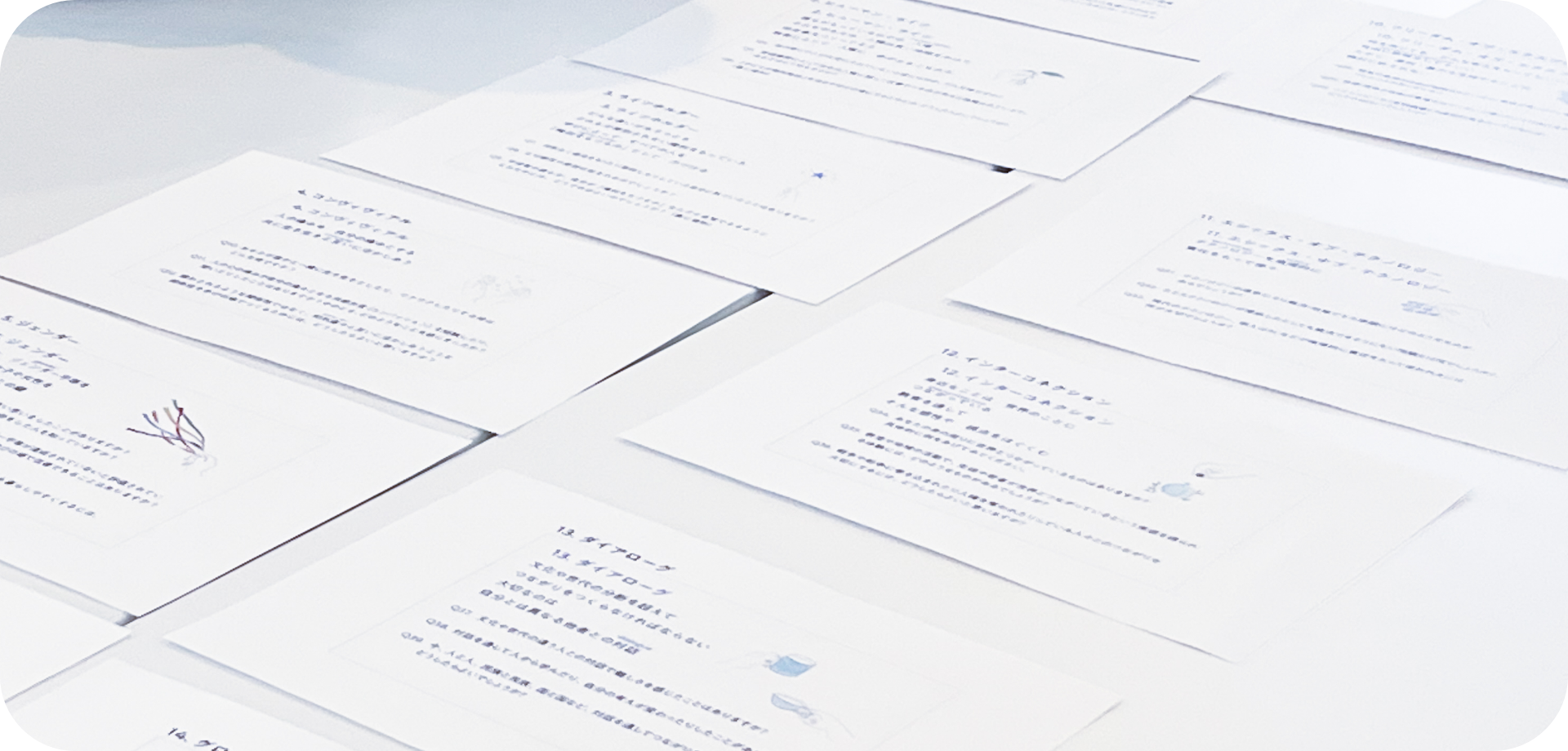
Believing that such history must not be repeated, we decided to create this card-based learning tool to promote wider understanding and use of the new Recommendation for all educators and students. This learning resource was developed through extensive discussion among volunteers from the University of the Sacred Heart in Tokyo and the Japan Association for International Education (JAIE), as part of a project supported by a Japan MEXT grant.
The 2023 Recommendation sets out fourteen Guiding Principles that can be regarded as its core. For this learning tool, we have selected simple English titles (one or two words) as keywords for each principle to serve as an entry point to understanding the Recommendation as a whole.
Beneath each title, we provide an essential message—an accessible, interpretive explanation of the Guiding Principles—along with three guiding questions designed to encourage all educators and students to make the issues their own. Detailed guidance on how to use the cards is provided in the following sections.
The UNESCO Recommendation calls on all of us to respect, promote, and protect these principles, and urges Member States to continuously review their laws, policies, and plans in light of the Recommendation.
We sincerely hope that this learning tool will serve as a first step toward understanding this new commitment of humanity, guide our education system in a more positive direction, and ultimately contribute to the realization of a peaceful, human rights–respecting,
and sustainable society envisioned by the Recommendation.
The 2023 UNESCO Recommendation Promotion Project Committee
The Japan Association for International Education (JAIE)
Project Representative / Professor, University of the Sacred Heart, Tokyo
Yoshiyuki Nagata
Card-Based Learning Material
2023 UNESCO Recommendation
14 Essentials and 42 Guiding
Questions
for Educators
Around the World
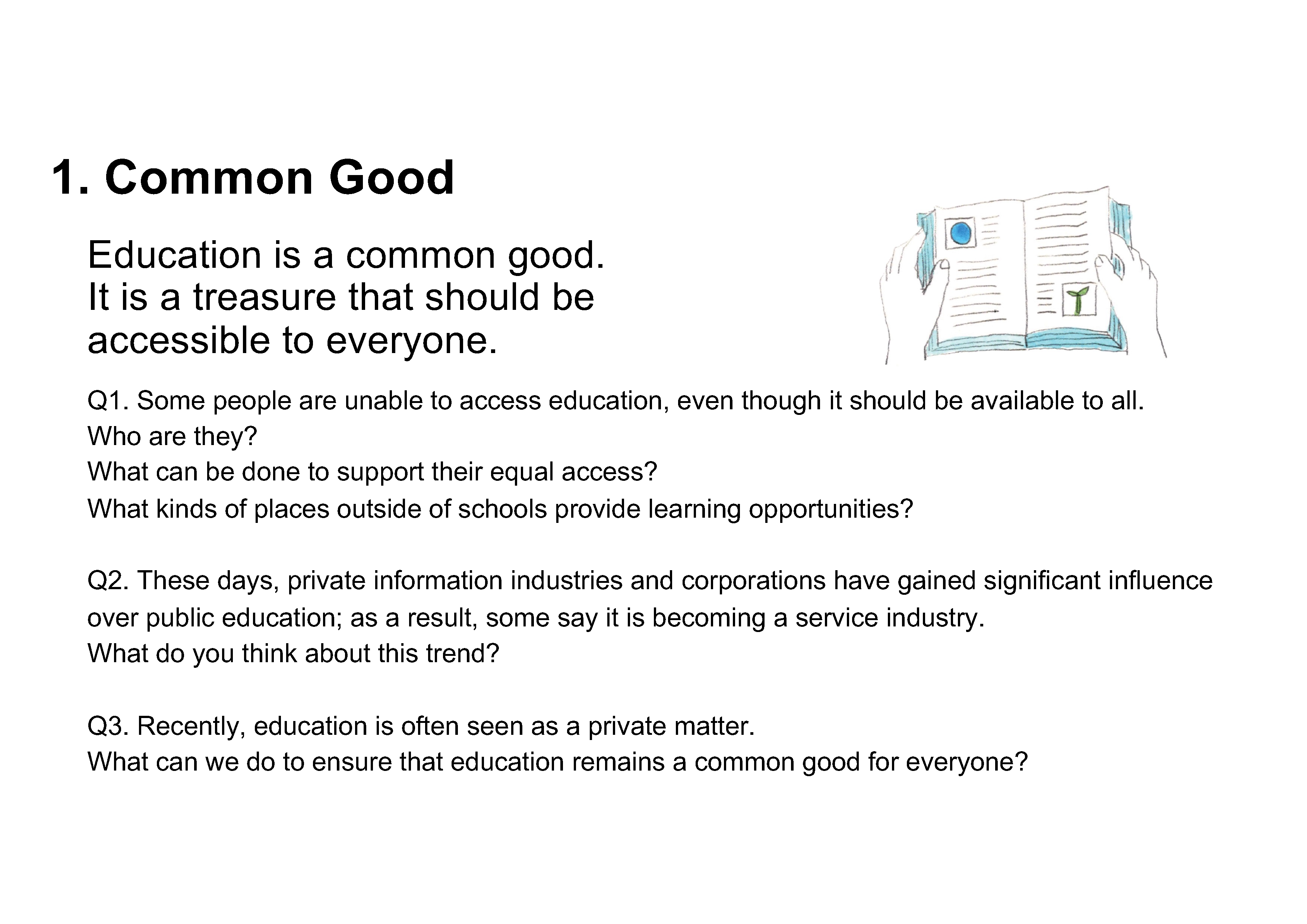
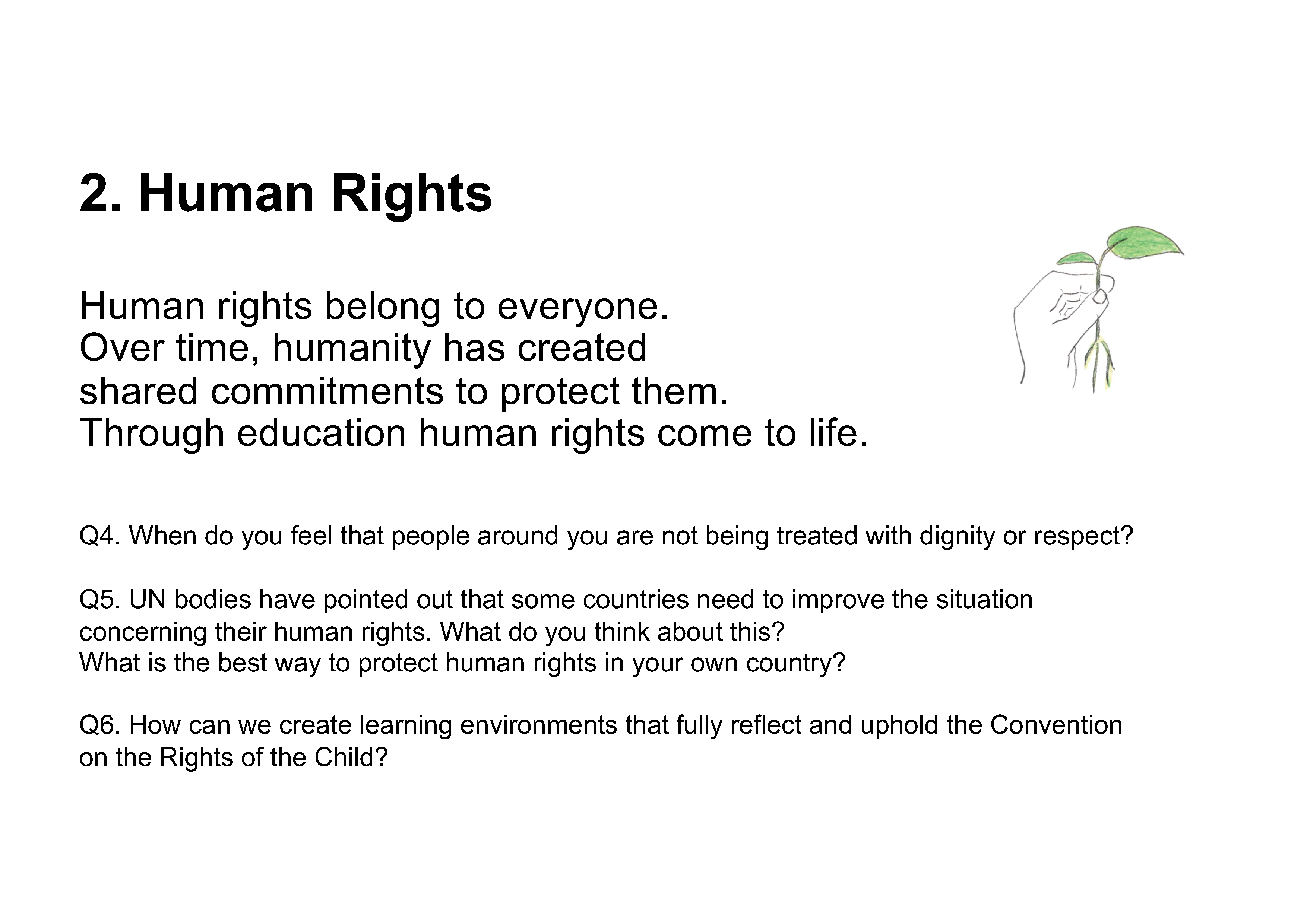
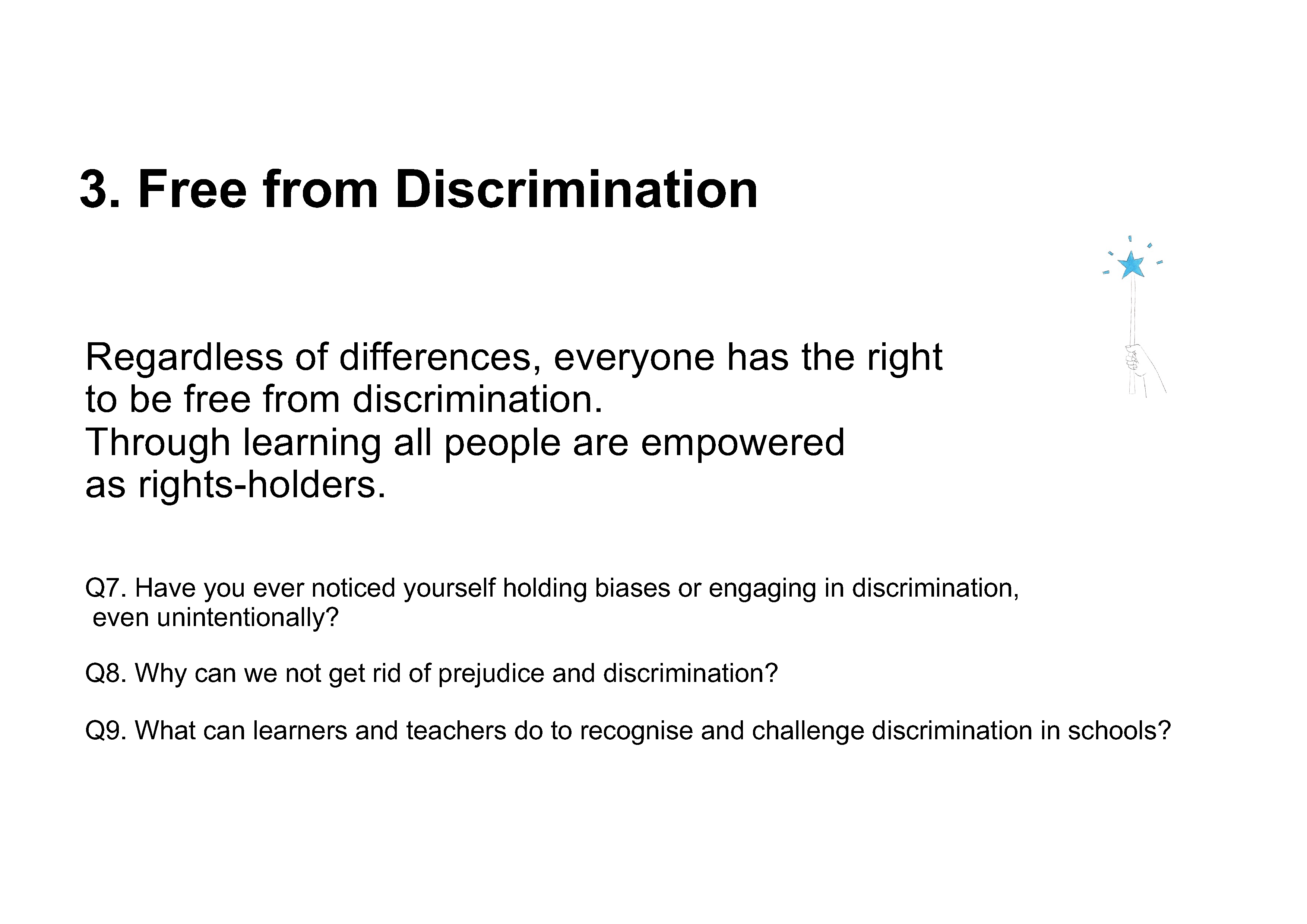
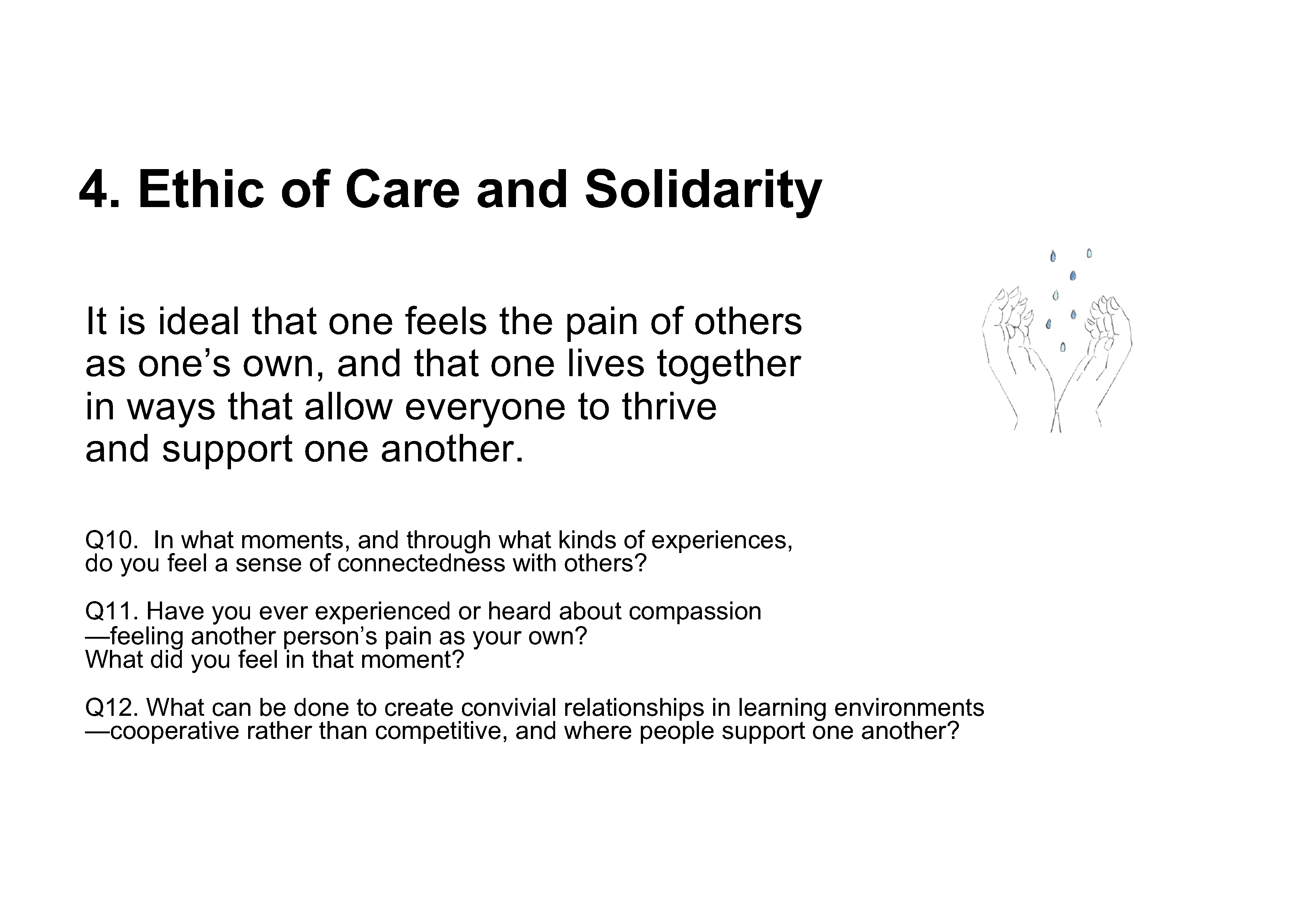
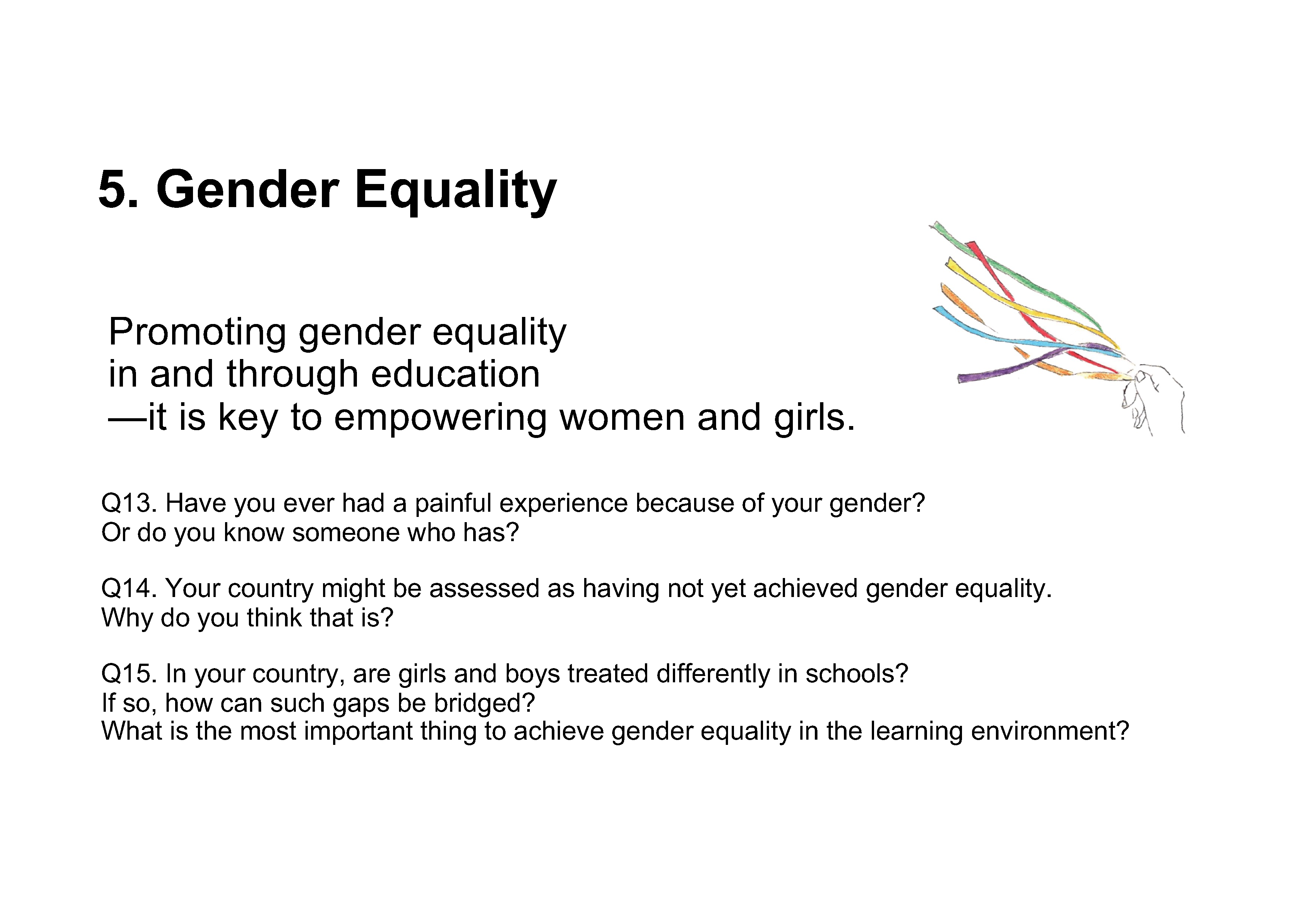
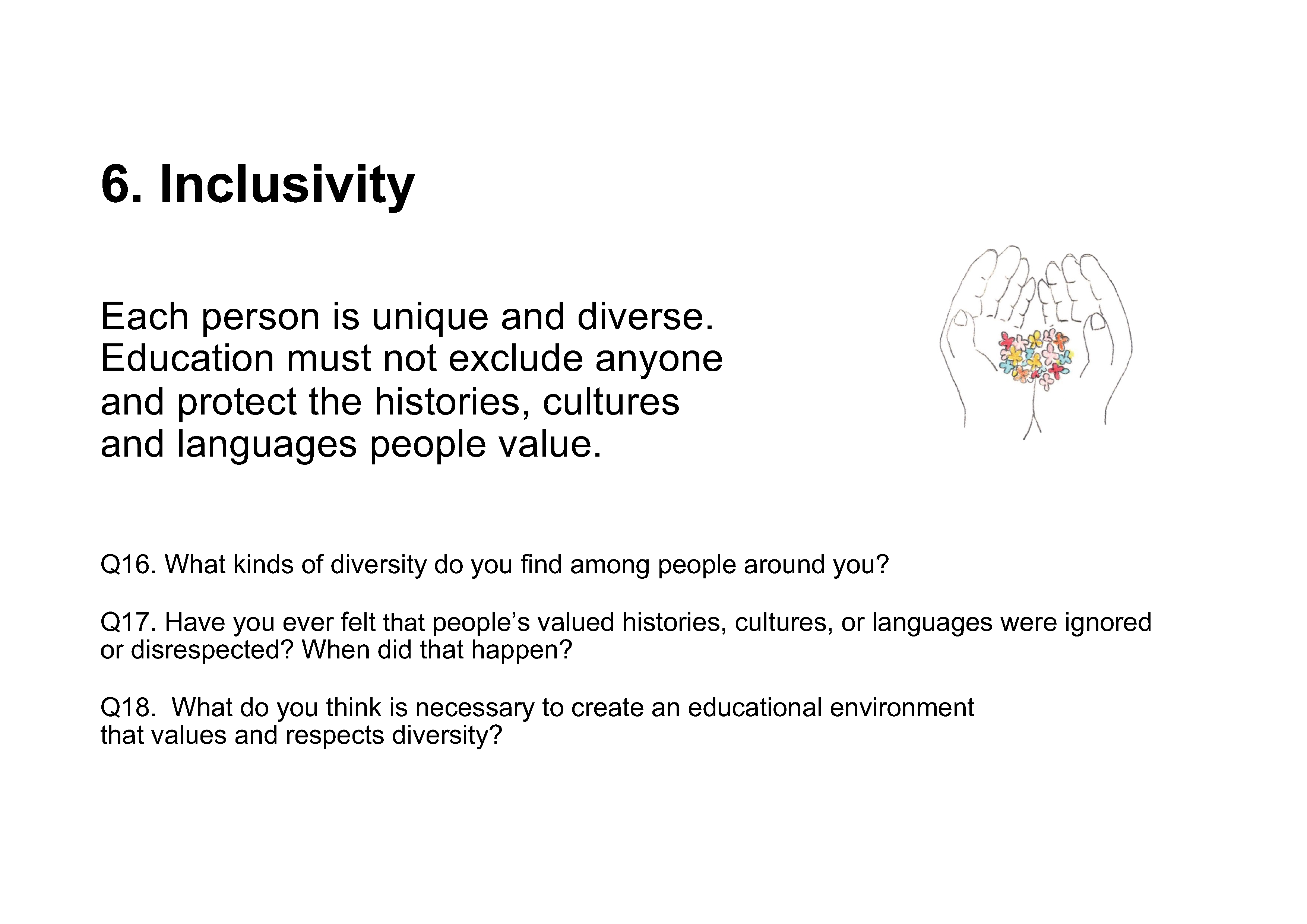
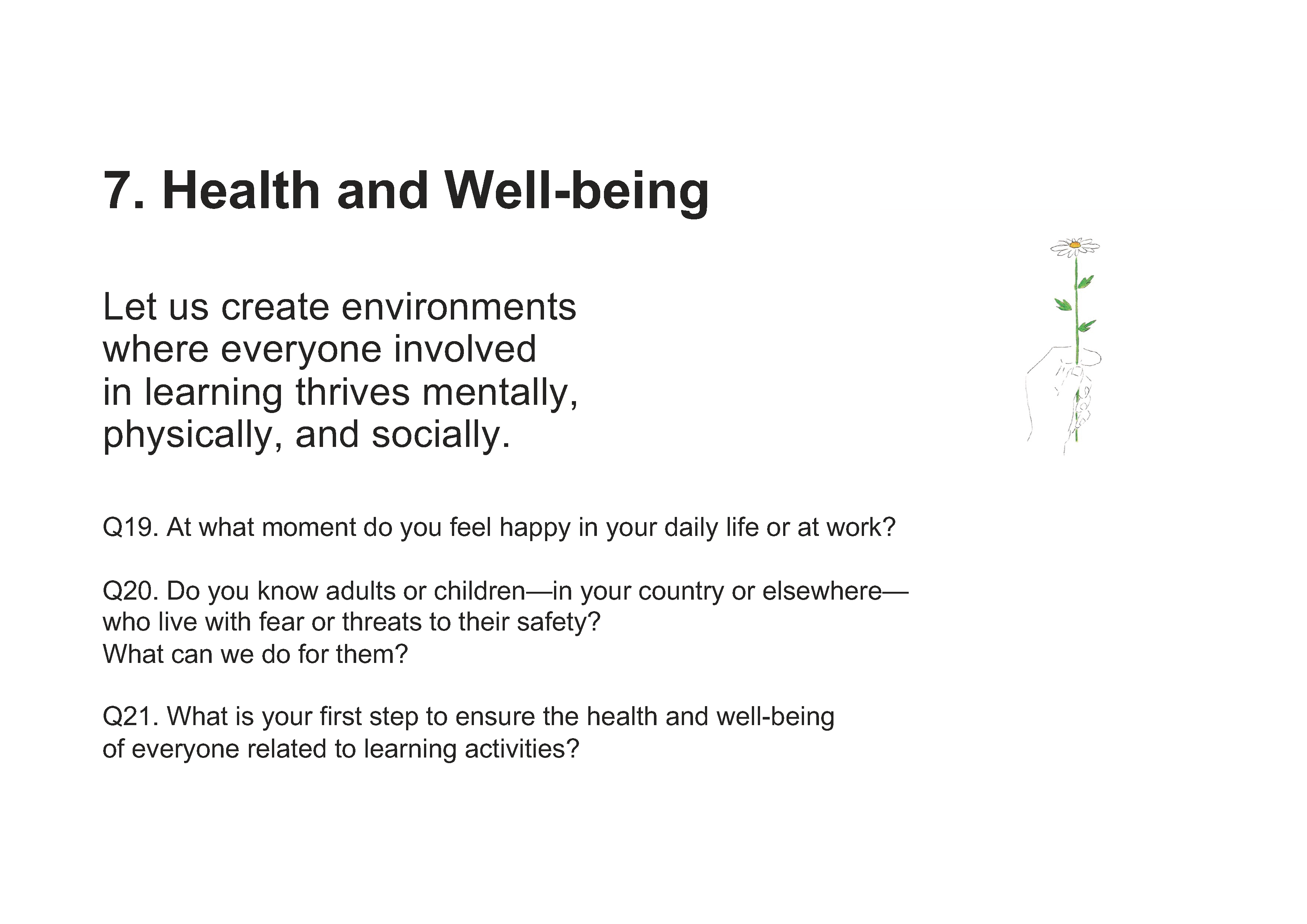
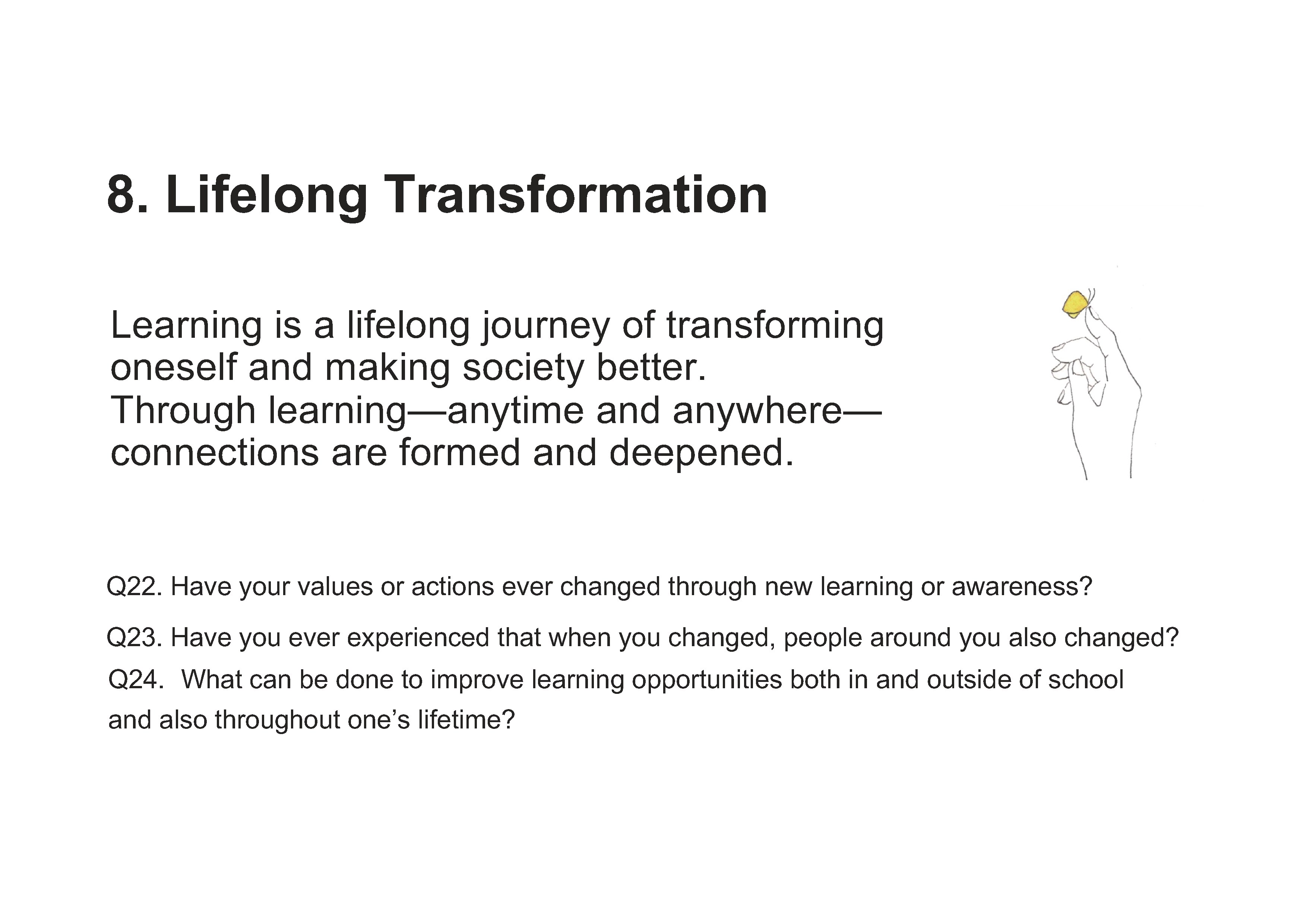
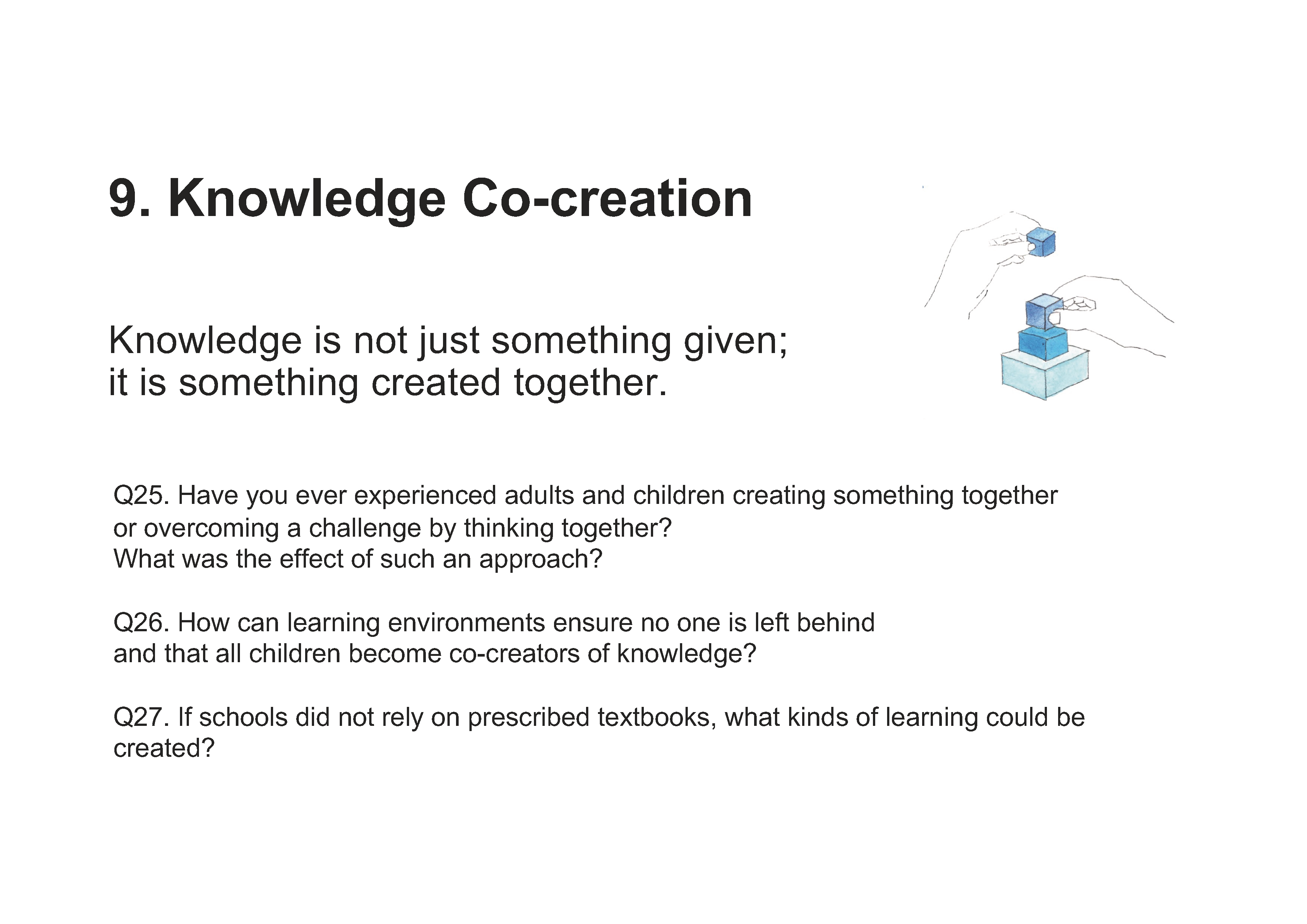
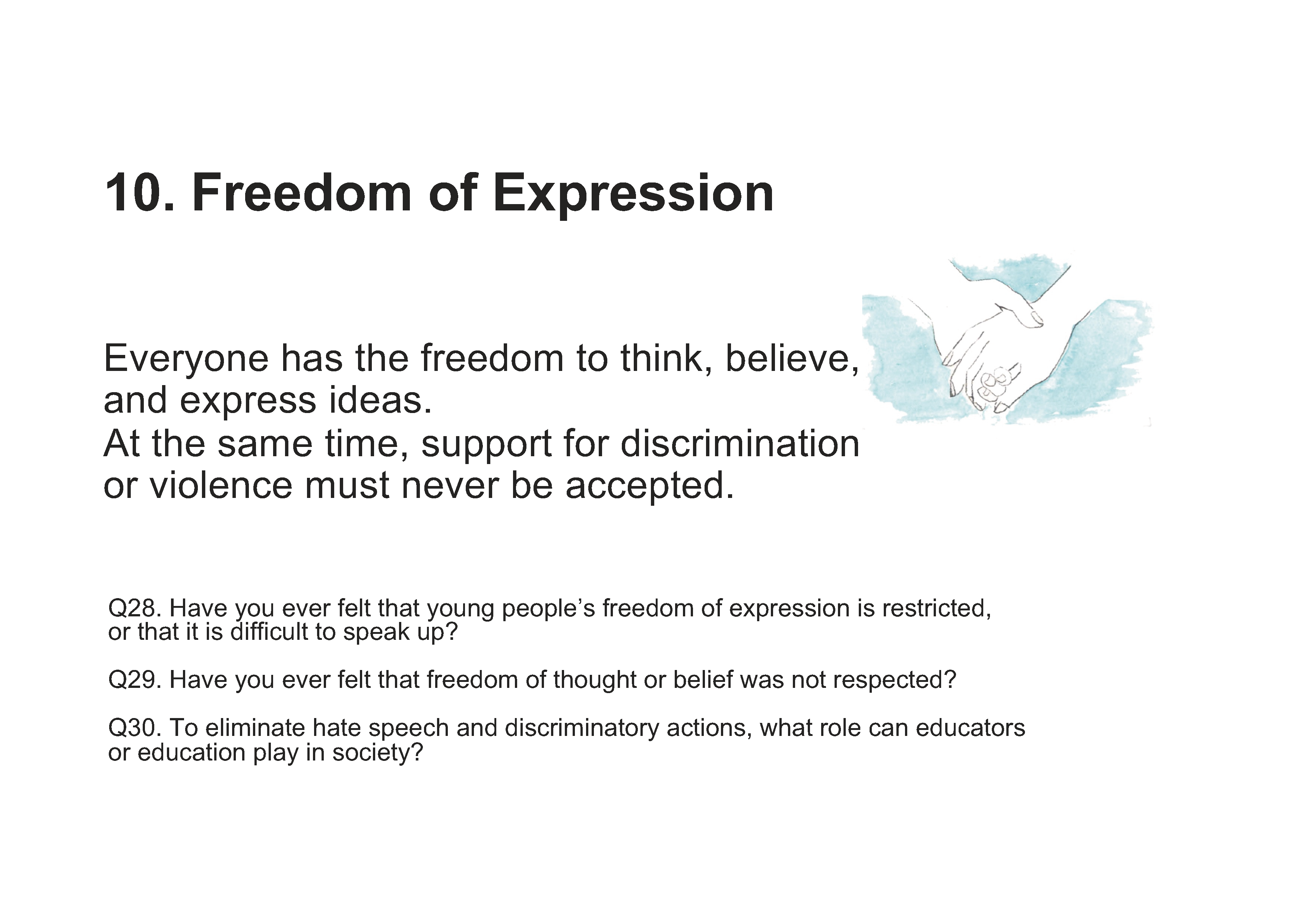
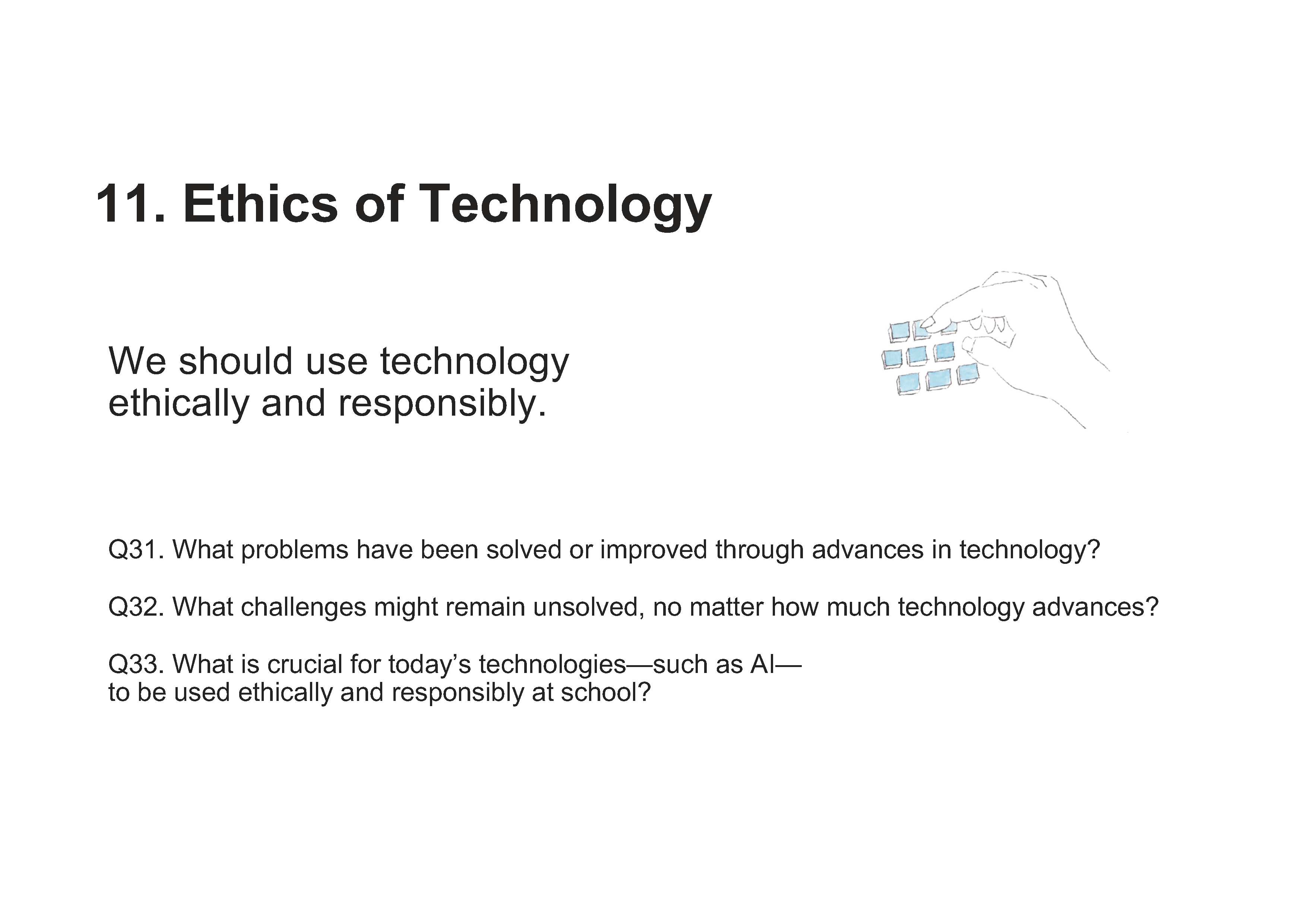
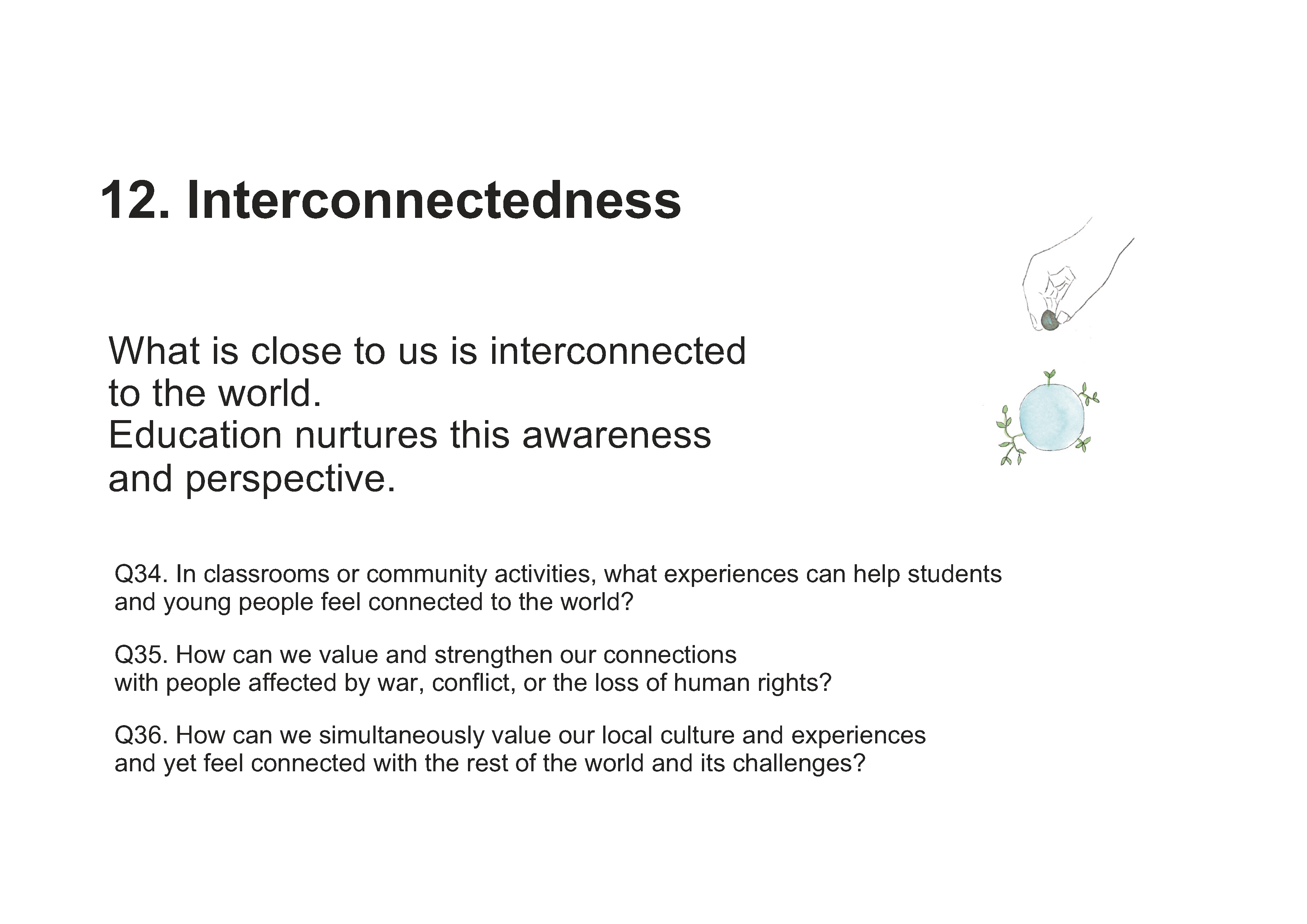
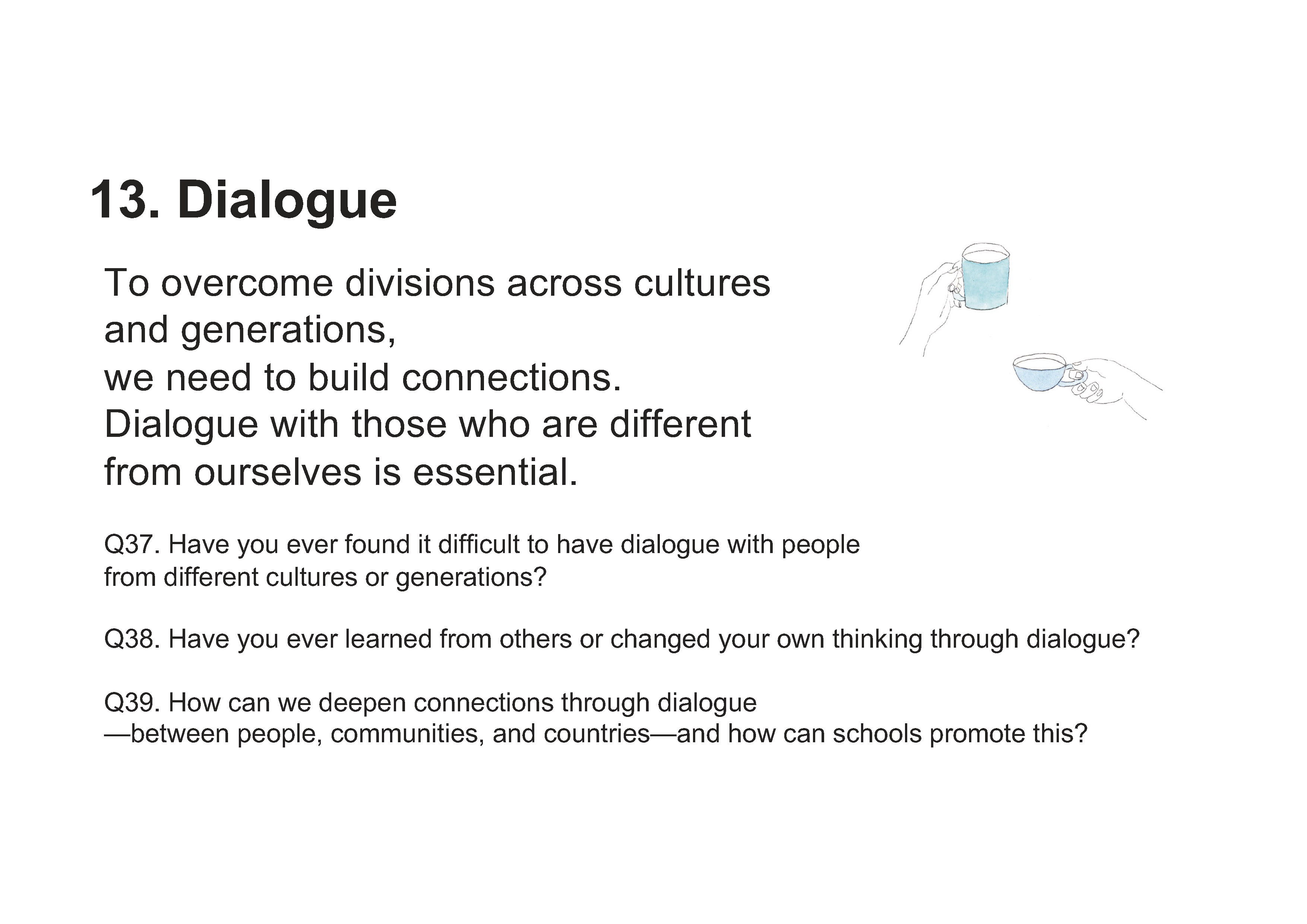
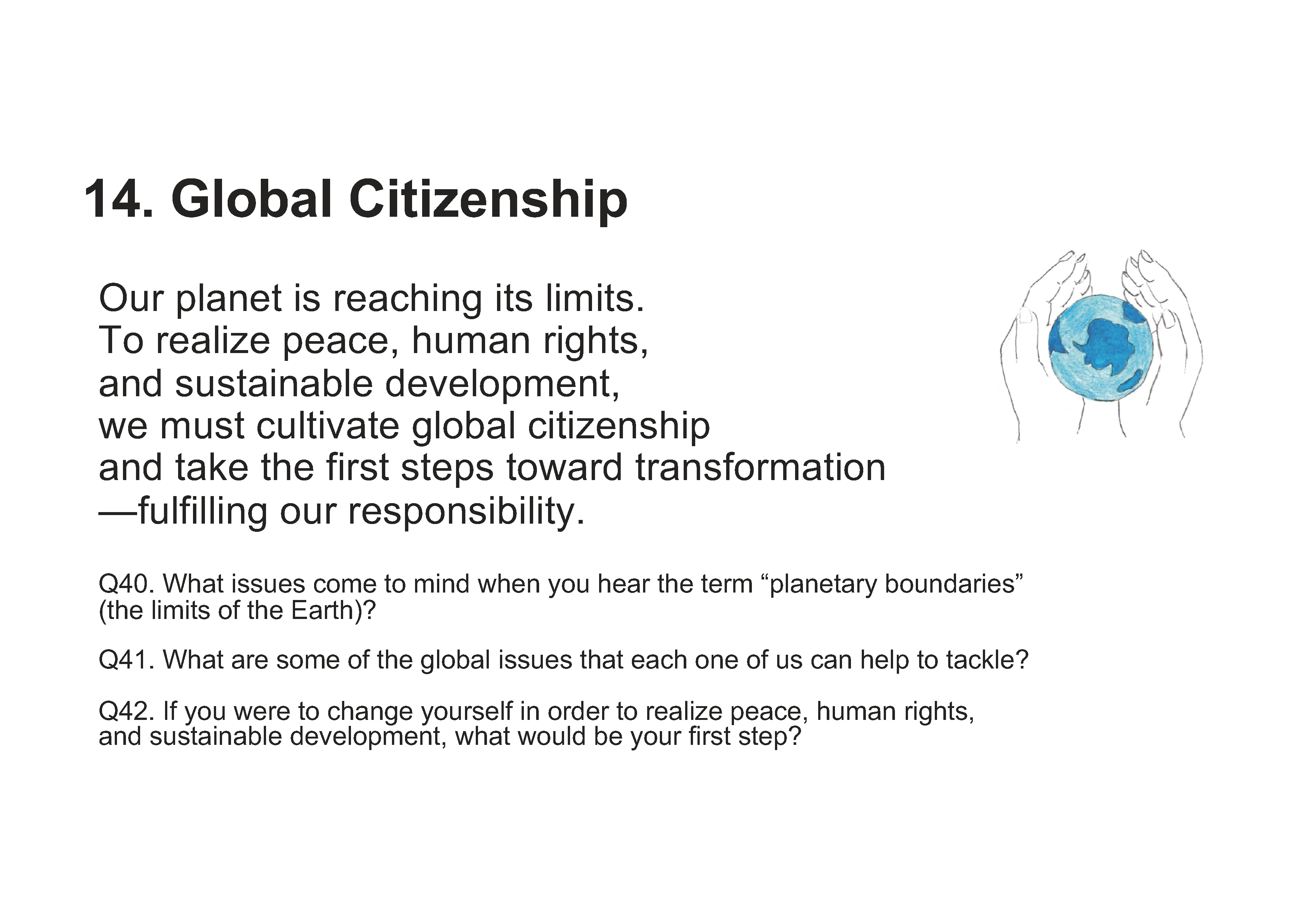
Download
In case you would like to print the Card-Based Learning Material on paper, please use the PDF version.
How to Use the Card-Based Learning Material
Ⅰ. What can we do with these cards?
What possibilities exist for education in today's schools and communities?
And what should be changed to address current challenges?
Let's explore these issues through dialogue, using the "Keywords,"
"Essences," and "Questions" on the cards as starting points.
Ⅱ. Before Engaging in Dialogue
- On the front of each card, you will find a keyword at the top, followed by an explanatory essence (interpretive translation), and 3 guiding questions at the bottom. On the reverse side, each card includes the excerpt from the original text.
- Use one set per group or individual.
- Form groups of 4 to 6 people. When you have many groups, an overall coordinator helps ensure smooth facilitation. Discussing one question usually takes 5 to 10 minutes, so decide in advance how many cards and questions to use.
- If participants are meeting for the first time, begin with brief self-introductions in each group. Sharing how you feel at the moment (nervous? excited?) can also be helpful.
- Designate a facilitator within each group to guide the discussion.
Enjoy the dialogue. As long as no one is disrespected, all opinions and impressions are welcome. There is no single correct answer to the questions. Feeling uncertain or confused is also important. Share questions about the issues and about others’ views, and avoid imposing your own opinions. Dialogue is a process through which our thinking changes. - Deepen dialogue through critical thinking, which is the ability to discern the truth.
Ⅲ. Engaging in dialogue using the cards
- 1.Sit in a circle in groups of around 4 to 6 people. First, look at all cards.
- 2.Select several cards, which you are interested in.
*The coordinator decides how many cards can be handled within the available time. If it is necessary to avoid overlap between groups or if time is limited, the coordinator may assign specific cards.
- 3.Decide the order of the cards to be discussed. Have one person in the group slowly reads aloud the keyword and essence of the selected card.
*If you prefer to begin the dialogue with a specific question, you may skip this step. - 4.Read aloud one of the 3 guiding questions written on the selected card.
*The questions are arranged in the order of a personal question, a general question,and an action-oriented question. It is recommended to start with the first question.
- 5.Share any ideas, possible answers, new questions, or opinions that come to mind regarding the question. (approximately 5 to 10 minutes per question.)
- 6.Repeat the same process with another question.
*If you wish to experience a larger number of cards, you may choose only one or two questions from the 3 questions on each card.
- 7.If time allows, freely discuss the significance and challenges of the keywords and essences.
- 8.Repeat steps 3 through 7 with another card.
- 9.Let's share the ideas with the whole group. You may then continue the dialogue with everyone.
*Please adapt these steps flexibly according to the number of participants, available time, and the composition of the group.
*It is also possible to begin with more specific questions and then move on to discussing the keywords and essences, rather than following the order shown above.
Ⅳ. Critical Thinking for Deep Dialogue
Try engaging in dialogue by asking questions such as the following.
- 1.What does that mean?
- 2.Why do you think so?
- 3.What are the underlying assumptions? Are they taken for granted?
- 4.What are the implications of that?
- 5.Is that really true?
- 6.What evidence supports that idea?
- 7.Are there any exceptions?
This learning material was developed by the Sacred Heart Institute for Sustainable Futures (SHISF), under the UNESCO Future Co-Creation Platform project funded by Japan’s Ministry of Education, Culture, Sports, Science and Technology (MEXT), with the cooperation of the Japan Association for International Education (JAIE).
The following experts, affiliated with the UNESCO Education Recommendation Special Committee of JAIE, were responsible for the production of this material:
Hiroshi Kazamaki (Chair), Hideki Maruyama (Vice Chair), Hiroko Abe, Sawako Fujii, Kaori Hirasawa, Akiko Kima, Yoshiyuki Nagata, Yuta Nagumo, Keiko Takami, Junichi Yano, and Atsuhiko Yoshida.