Guided by Mother Britt’s Teachings
The Start from Point Zero
Sadako Ogata devoted herself to supporting refugees and promoting international cooperation as the United Nations High Commissioner for Refugees and as President of JICA.
As a member of the first graduates of the University of the Sacred Heart, her strong commitment to humanitarian aid reflects the spirit of respect for human dignity practiced by the university’s first president, Mother Britt.

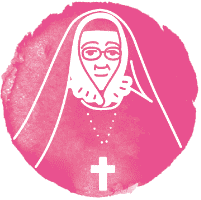

Mother Britt's Lessons and Way of Life
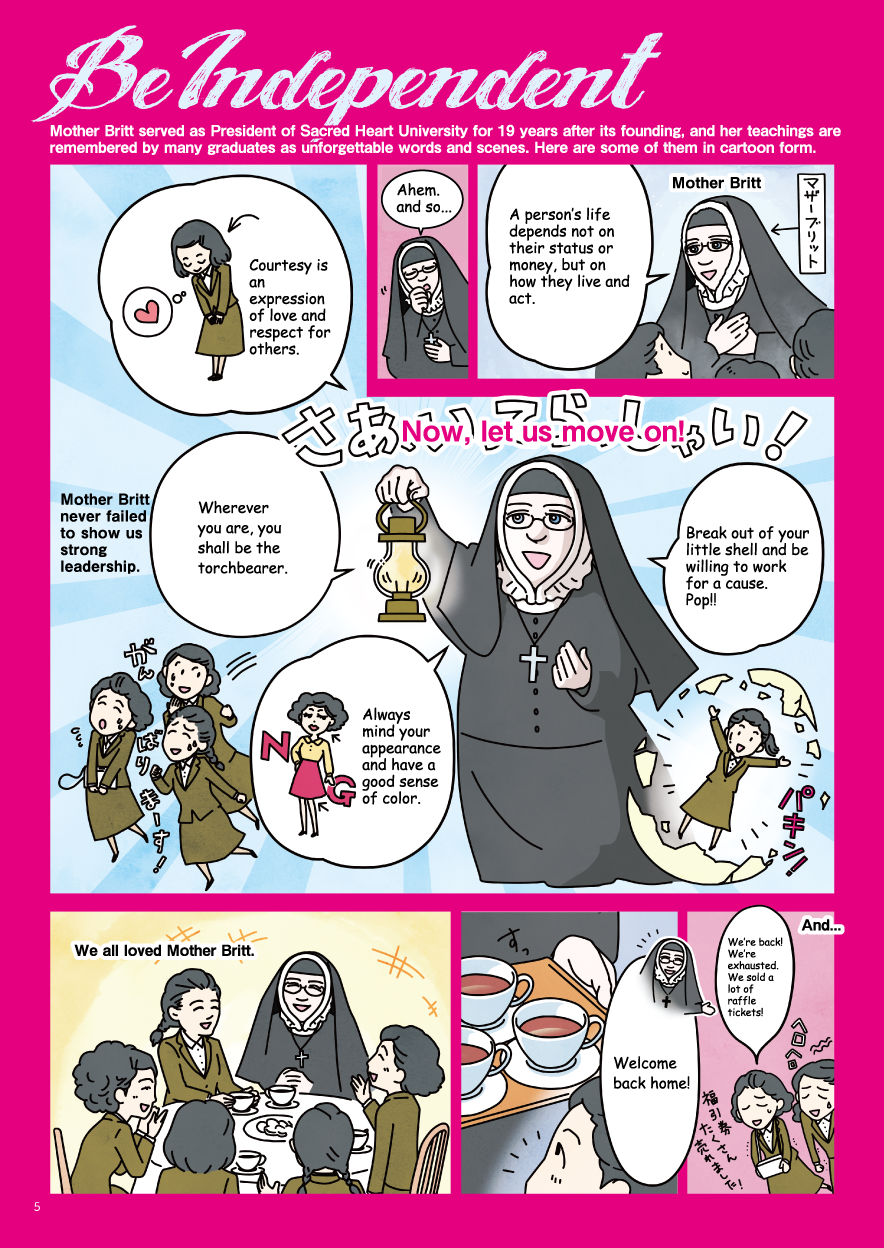
Mother Britt served as the President of Sacred Heart University for 19 years after its founding, and her lessons were remembered by many alumnae.
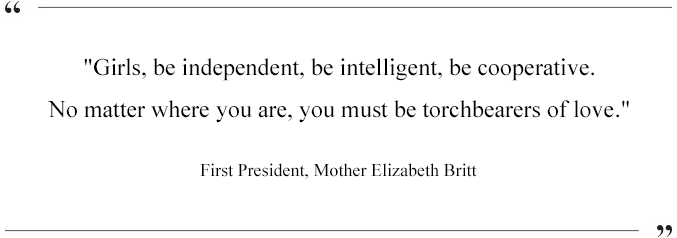
Being one of the first graduates, Mrs. Ogata said, "Mother Britt had a clear vision as to how women should be in the future which was for women to think on their own and act for the benefit of others. I was greatly influenced by this vision."
Two of Mother Britt's most outstanding characteristics were her concem over each individual and her high business management skills.
What Mother Britt Taught Us through Her Actions
In her book, Mrs. Ogata mentions that "Mother Britt was a great leader who was full of many ideas along with execution and negotiation skills. One could never refuse her request."
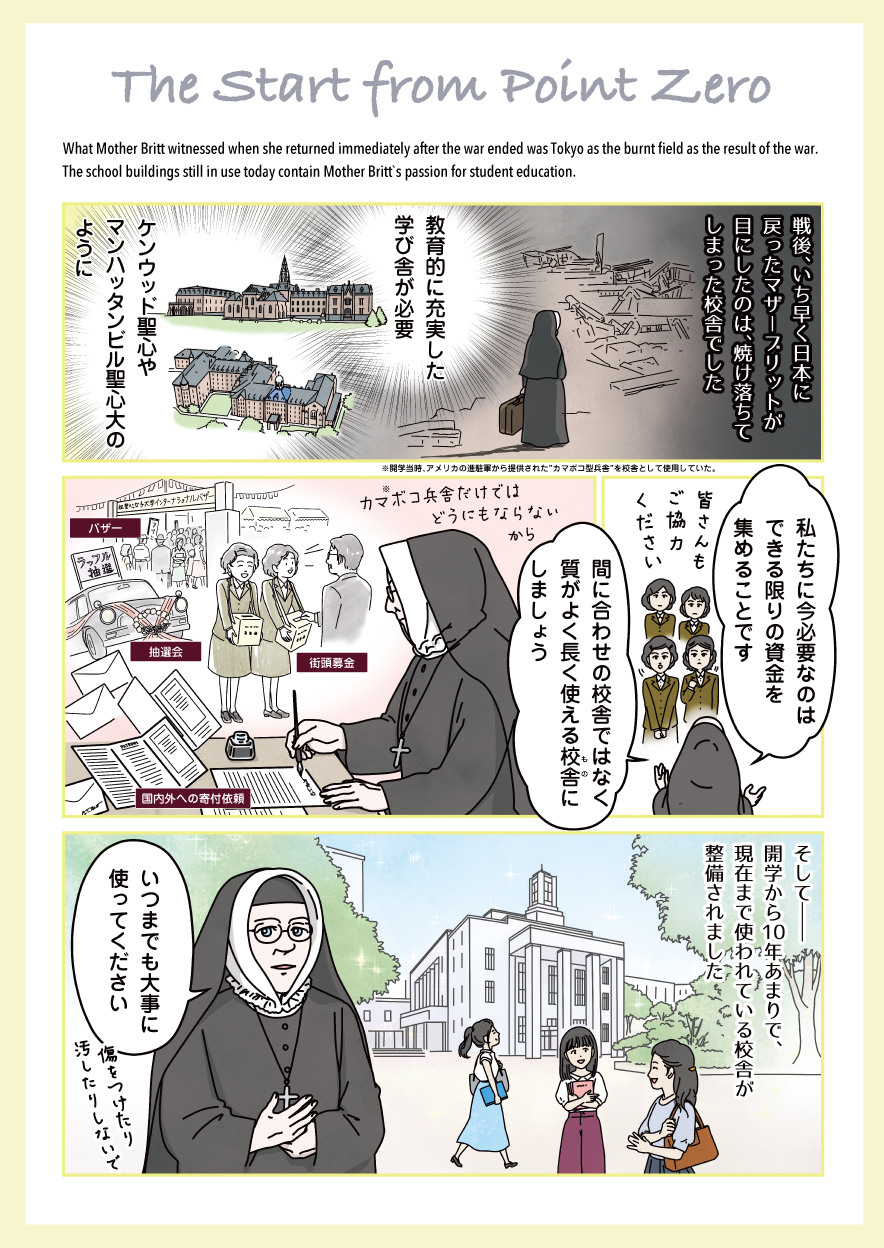
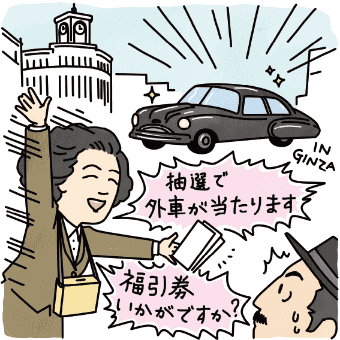
In the early days of the University of the Sacred Heart, in order to obtain funds for the construction of the school building, Mother Britt devised a number of elaborate fundraising activities and asked students to participate.
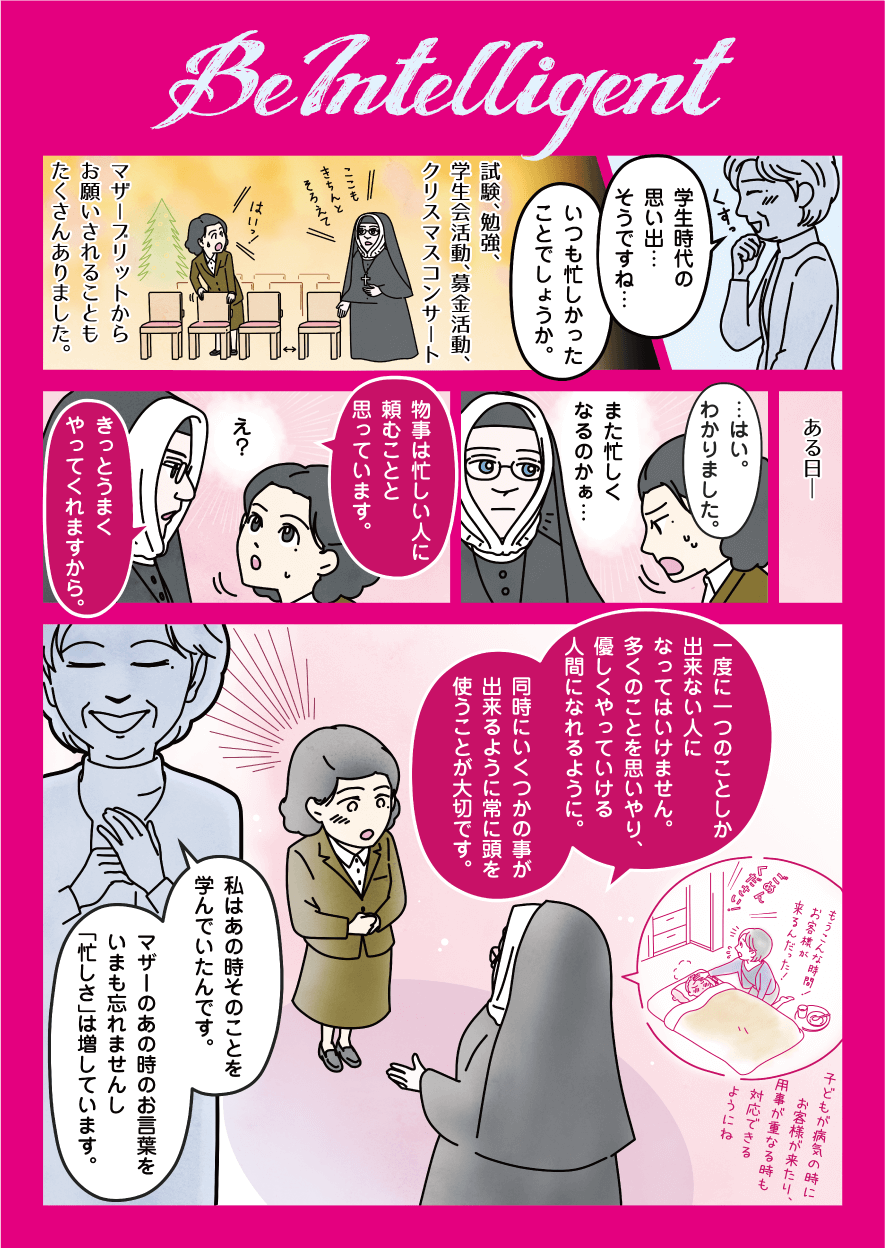
Standing by a street corner in Ginza, the students sold raffle tickets to raise money—the prize was a foreign-made car that was donated by supporters. Mother Britt encouraged the students by saying, "Even if you are busy with exams and other things, be able to do several tasks at the same time."
These words reflected her concern for the future of the students, by telling them to act efficiently when they were busy.


The Basics of Community Service Learned at Sacred Heart
Mrs. Ogata developed her basic community service training during her college years through Mother Britt's policy, which was for every student to participate in community service.
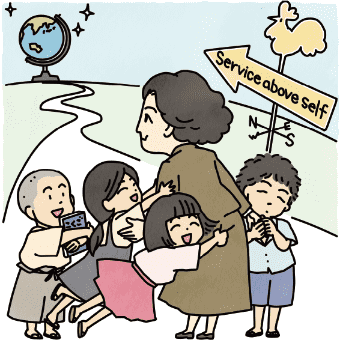
For example, once a year, instead of attending regular classes, students would invite children from the Mikawashima Settlement (an orphanage) to the campus and play games and sports with the children. They would also prepare lunch and souvenirs for the children to take back. The students also accompanied the children's Rinkai School (summer school by the beach) during the summer break and help prepare their meals
“Service above Self”
"'Service above Self'is the motto of the Rotary Club and it has been a guiding principle in my life." (from her acceptance speech at the 2016-17 Rotary Alumni World Service Awards).
Inspired by Mother Britt's teachings to "Open your eyes and look at the world," Mrs. Ogata attended Georgetown University in the United States after graduating from the University of the Sacred Heart in 1951 as a Rotary Ambassadorial Scholar.
She often attended Rotary Club meetings where she often encountered the motto. Given this noble-minded phrase that resonated within her, she expanded her service activities from the university to the world, which eventually oriented her life career.


Get Involved in Society
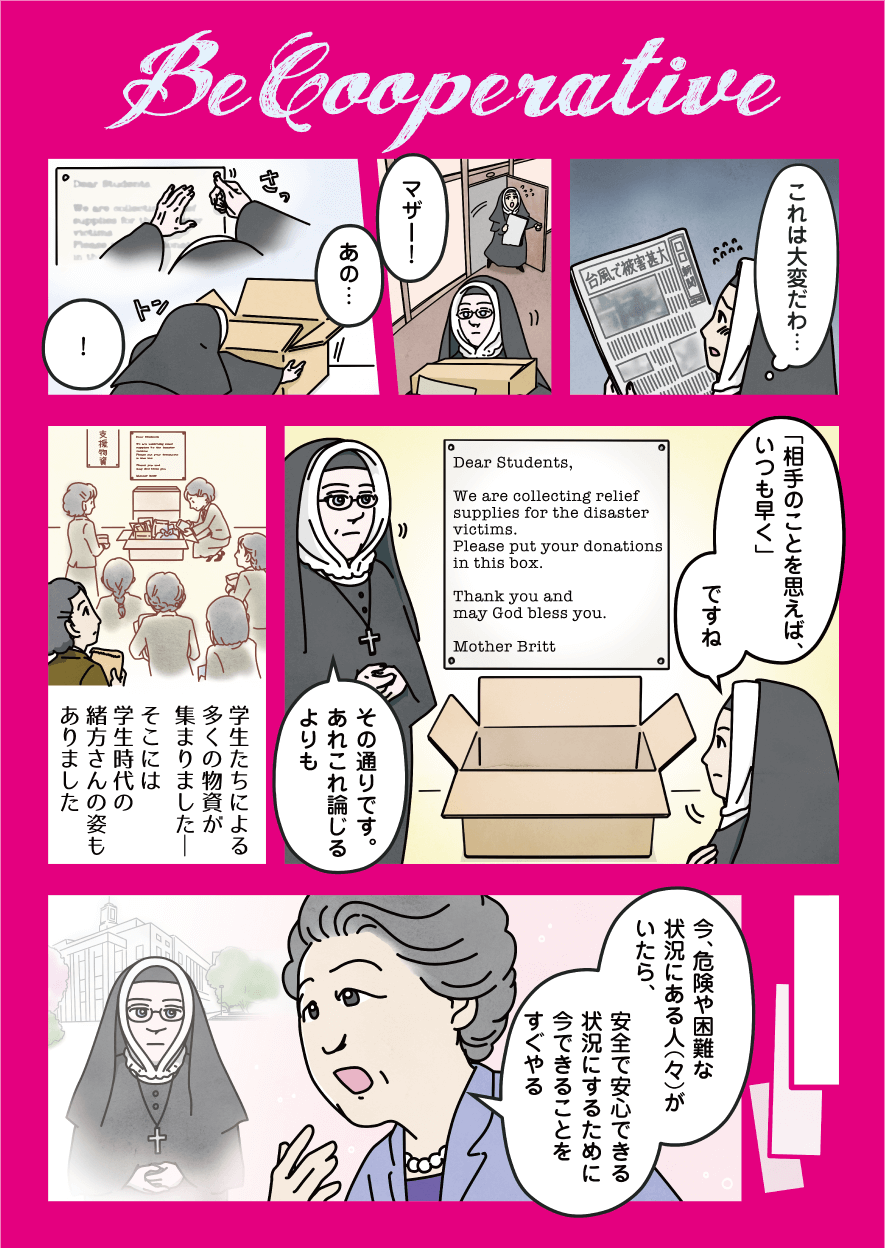
Mother Britt emphasized that her students should "not only make life better for one's family but for society as well." She guided the students to raise funds for social activities while they were still in school, hoping that they would practice their leadership for a better society in the future.
Although she was busy with her work as president, she taught a course on "Religion" to the first-year students using textbooks she had written herself, and a course on "Current Ideas" to the seniors
Listening to Opinions and Working Together in the Field
Projects that required students to work together to achieve a common goal were implemented in those days such as competitions among the different class years and school bazaars.
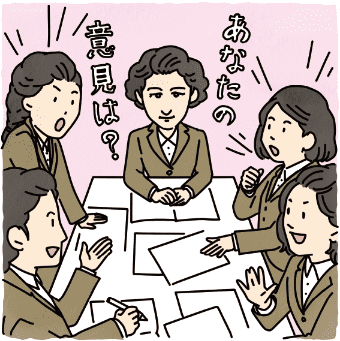
Mother Britt reiterated the importance of "consulting, cooperating, and collaborating with peers." She encouraged students to go out into the field and take action rather than having things done by others.
The members of the Student Government Association were carefully instructed on leadership. She would say, "A leader who tries to do everything by herself will not be able to achieve much. Listen carefully to the opinion of others, consult with them before making decisions, and put them into practice through collaboration." Mrs. Ogata recognized that Mother Britt's guidance was very useful later in her life.


Human Security
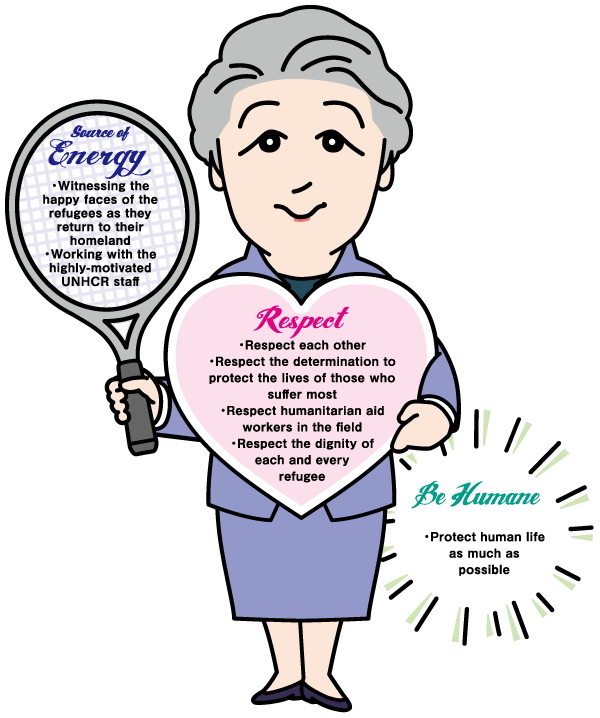
In the 1990s, after the end of the Cold War, it became impossible to manage the world's myriad problems on a country-by-country basis. The Kurdish refugee crisis-which arose in Iraq during the 1991 Gulf War was one such problem. Mrs. Sadako Ogata - the United Nations (UN) High Commissioner for Refugees at the time attempted to solve this problem by prioritizing the principle of "protecting human lives." Her strong belief in this principle changed the fundamental grounds for future international cooperation and development.
Protecting the Lives and Dignity of Individuals
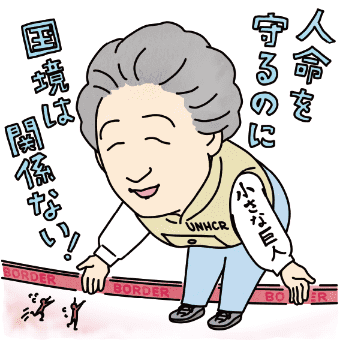
According to the Refugee Convention, refugees who have been forced to flee their country have the right to protection. The office of the United Nations High Commissioner for Refugees (UNHCR) operates in accordance with this agreement. However, based on the idea of "protecting human lives in ways that embrace human dignity", Mrs. Ogata decided to protect the Kurdish refugees inside Iraq This unconventional decision of Mrs. Ogata has become one of the leading concepts of "Human Security" and has had a marked impact on the international community, a shift from focusing on the security of the nation to individuals and protecting them from the threats they face.
Total Support for Refugees in consideration of their Future
Mrs. Ogata's principle with regard to refugee support was to protect the dignity of human lives: "Refugee assistance does not end when the refugees return to their home countries," and "Where there is life, there is still a chance."
Her ultimate objective was to achieve reconciliation and reintegration between affected parties, by continuing to provide the needed support until the refugees were able to return home and regain peaceful and stable lives.
Education and Support for Women's Independence
Mrs. Ogata insisted that refugees need consistent support to rebuild their countries and she focused on the importance of post-primary education for the youth. Accordingly, she established the Refugee Education Trust* in 2001.
In dealing with the most complicated and difficult case of the Rwandan refugees relief effort following the 1994 genocide, it became apparent that nearly 70 percent of the refugee population comprised women with little or no education.
To build a new Rwanda, Mrs. Ogata believed that education was essential for women's empowerment and was vital for the country's reconciliation and reintegration process. In 1997, she made a special effort to promote support to women through the launch of the "Rwanda Women's Initiative".
With the cooperation of the government and numerous women's support groups, Rwandan women made remarkable progress for their empowerment. The current proportion of female parliamentarians in Rwanda is 56%—the highest in the world (as of 2021).
- "The Refugee Education Trust (RET) was founded by Mrs. Ogata. The Sacred Heart Refugee Education Trust (SHRET)-a student organization at the University of the Sacred Hea『t in Tokyo, Japan-operates in the spirit of the RET.

Cooperation, Solidarity, and Peacebuilding
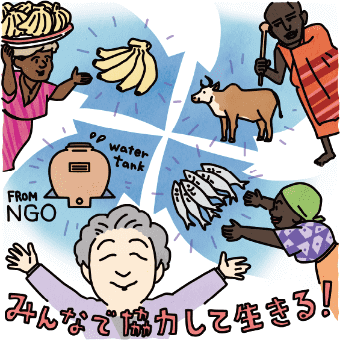
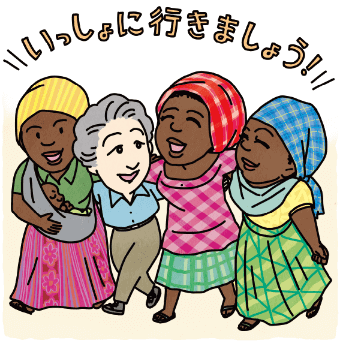
The world comprises different cultures, values, and societies, but we are all human beings, and we depend on each other. We should care about others as well as themselves. During her time as the UN High Commissioner for Refugees and also throughout her lifetime career, Mrs. Ogata was devoted to solving the extremely challenging global issues related to conflicts and refugees.
Interdependence in Life
We live in a global society and are dependent on each other. To reflect this interconnectedness, Mrs. Ogata uses the phrase, "helping each other makes the world go round".
Mrs. Ogata has served as the UN High Commissioner for Refugees, as Japan's Special Representative to the Prime Minister for Afghanistan Assistance, and as President of the Japan International Cooperation Agency (J ICA). She has worked with various governments, institutions, organizations, and individuals to address and tackle challenges related to conflicts, refugees, and poverty.
In most often cases, it is not an easy mission to promote reconciliation and encourage cooperation among those in conflict. However, Mrs. Ogata has succeeded in providing opportunities for people of different ethnic groups to work together once a conflict has ended to aim in realizing their sustainable futures.